

ICAM CHAMPIONS EVIDENCE-BASED FISCAL POLICY AT THE 2026/27 NATIONAL BUDGET PRE-BUDGET CONSULTATIONS
16th January 2026
The Institute of Chartered Accountants in Malawi (ICAM) has once again reaffirmed its strategic role as a trusted professional advisor to the Government by making a comprehensive policy submission towards the formulation of the 2026/2027 National Budget.
This took place during the Ministerial Pre-Budget Consultation Meeting for the 2026/27 Fiscal Year, held on 14th January 2026 at Sunbird Mount Soche Hotel in Blantyre.
The high-level meeting brought together senior Government officials, private sector representatives, professional bodies, academia, and development partners to shape fiscal and economic priorities for the forthcoming budget. The meeting was officially opened by the Secretary to the Treasury, followed by a policy statement from the Minister of Finance, Economic Planning and Decentralisation, and presentations from key stakeholders, including ICAM.
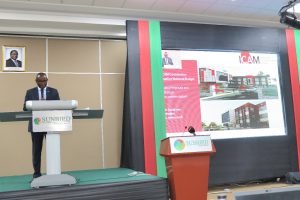
ICAM President, CA. Daniel Jere, addressing the Ministerial Pre-Budget Consultation Meeting
Presenting on behalf of ICAM, ICAM President, CA. Daniel Jere, delivered a robust, evidence-based submission anchored in professional research, stakeholder consultations, and international benchmarking. The submission reflected collective views from ICAM members working across key sectors of the Malawian economy, complemented by engagement with institutions such as the Malawi Stock Exchange (MSE).
At the core of ICAM’s message was the Institute’s conviction that Malawi will not tax its way into prosperity, but rather must pursue a fair, predictable, and growth-oriented tax system that supports production, investment, formalisation, and public trust.
ICAM’s proposals were deliberately aligned to the Malawi 2063 Vision and the need to balance revenue mobilisation with economic transformation, competitiveness, and social equity.
KEY POLICY THEMES FROM ICAM’S SUBMISSION
- Reforming PAYE for fairness and productivity
ICAM expressed strong concern over the continued over-reliance on Pay-As-You-Earn (PAYE) from a narrow base of formal sector employees. The Institute highlighted the erosion of disposable incomes due to inflation, bracket creep, and insufficient adjustment of tax thresholds.
To address this, ICAM proposed:
- Increasing the PAYE tax-free threshold to not less than MWK250,000 per month;
- Introducing additional graduated tax bands, including a 20% band, to enhance progressivity and equity;
- Institutionalising regular, realistic reviews of PAYE thresholds to protect low- and middle-income earners;
- Complementing PAYE reforms with measures that broaden the tax base and formalise the informal sector.
ICAM emphasised that fair PAYE reforms can improve productivity, tax morale, and voluntary compliance.
- Broadening the tax base and informal sector inclusion
A dominant theme in ICAM’s submission was the unsustainability of taxing a small formal sector while large segments of the economy remain informal.
ICAM recommended:
- Simplified tax regimes for SMEs and informal traders;
- Gradual integration of informal businesses through digital platforms and mobile payments;
- An education-first approach to tax compliance rather than punitive enforcement;
- Incentives that reward compliance and encourage formalisation.
The Institute underscored that sustainable revenue growth lies in expanding the tax base, not increasing tax rates.
- Capital markets, investment and capital gains tax reform
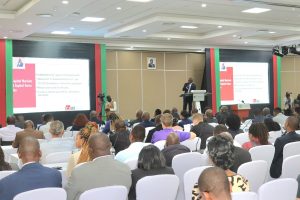
Part of the audience listening to ICAM’s presentation on capital markets
ICAM strongly supported the development of Malawi’s capital markets as a source of long-term, patient capital for national development.
In this regard, ICAM:
- Supported the introduction of Capital Gains Tax (CGT) within a modern tax framework, but raised concern over the current 30% CGT rate, which is regionally uncompetitive;
- Recommended reducing CGT on listed securities to 10–15%, or taxing only a portion of realised gains;
- Proposed rebasing asset values to 31 December 2025 to enhance fairness;
- Supported rollover relief for portfolio rebalancing to promote liquidity and investment;
- Advocated for a standalone CGT chapter in the Taxation Act to improve clarity and administration.
ICAM further supported maintaining zero CGT for companies listed on the Enterprise Development and Growth Exchange (EDGEx) to promote SME formalisation, governance, and long-term tax base expansion.
- VAT, sales tax and other tax policy proposals
ICAM highlighted structural challenges with the current VAT system, including delayed refunds, high compliance costs, and weak enforcement.
Key recommendations included:
- Faster VAT refund processing, particularly for exporters;
- Introduction of VAT on e-services;
- Review of Advance Import Tax (AIT), which constrains business cash flows;
- Exploring the feasibility of Sales Tax as an alternative to VAT in the medium term, drawing lessons from countries such as Nigeria and India.
- Protecting pensions and long-term savings
ICAM cautioned against introducing taxes on pension benefits at payout, citing risks of double taxation, low replacement ratios, and misalignment with the objectives of the Pensions Act.
The Institute emphasised the critical role of pension funds in:
- Mobilising long-term domestic savings;
- Financing infrastructure and national development;
- Providing social protection and retirement security.
ICAM therefore recommended continued tax protection for pension contributions, investment income, and benefits until the system matures.
- Strengthening tax administration and governance
Beyond policy design, ICAM stressed that efficient administration yields more revenue than new taxes.
Key proposals included:
- End-to-end digitalisation of tax administration at MRA;
- Consistent interpretation and application of tax laws;
- Establishment of a specialised International Tax and Transfer Pricing Unit;
- Adoption of selected BEPS Pillar 1 and Pillar 2 provisions;
- Improved dispute resolution mechanisms, particularly for SMEs.
ICAM also raised broader governance issues affecting tax compliance, including exchange rate instability, high energy costs, wasteful public expenditure, and the need for visible value-for-money in public service delivery.

ICAM CEO, CA. Noel Zigowa, being interviewed during the Pre-Budget Consultation Meeting
STRATEGIC FISCAL REFORMS FOR LONG-TERM STABILITY
As part of its value-add to national policy formulation, ICAM proposed several medium- to long-term strategic reforms, including:
- Development of a 3–5 year Medium-Term Tax Policy Framework (MTTPF) to reduce frequent annual tax changes;
- Transition to a clean wage bill system in Government and parastatals to improve fiscal discipline;
- Introduction of green and climate-responsive taxation;
- Strengthening local government revenue mobilisation and professionalising financial management, especially in light of increased CDF allocations.
- Incentives for domestic capital market development and infrastructure financing.
ICAM’S COMMITMENT TO NATIONAL DEVELOPMENT
In closing, ICAM reiterated its readiness to continue working closely with Government and other stakeholders to refine and implement policies that promote inclusive growth, fiscal sustainability, and economic resilience.
The Institute remains steadfast in its belief that a fair, efficient, and predictable tax system, supported by strong governance and professional public financial management, is central to achieving Malawi’s long-term development aspirations under Malawi 2063.
“Transformation will not come from higher taxes, but from trust, fairness, and policies that support production, investment, and shared prosperity,” ICAM emphasised.
Editor-In-Chief